

A Review of Silivac: Sous Vide Without Plastic
Can you safely cook sous vide without plastic? Yes. But is it any good at cooking sous vide?
I have been wary of the consumption of microplastics and have written on the topic here. I went somewhat overboard when I first looked into the harms of microplastics and wrote a second post. There is little doubt that microplastics, which form with the degradation of plastic products, can harm the environment. There is some evidence of risk to human health, but not as much evidence as I had initially thought. In animal studies and a few human studies, accumulation of microplastics in the body may increase the risk of stroke and cancer. I am not sure how much actual risk this translates to, but microplastics are definitely worth avoiding when possible.
The good news is that when food is stored in plastic containers but not heated, the degree of microplastic shedding is low. Therefore, storing food in vacuum-sealed, high-quality, food-safe plastic bags seems to be low risk. On the other hand, heating food in a plastic container results in large amounts of ingested microplastics. I try to avoid coffee cups that contain plastic (most do) and tea bags made with plastic (again, most do), but I have no problem vacuum sealing salmon and storing it in the freezer or cheese to protect it in the refrigerator.
Sous vide, even in high-quality plastic bags designed for it, worries me. For an excellent guide to sous vide and its safety, I recommend Serious Eats. Sous vide recipes call for cooking at temperatures ranging from 125 degrees to 160 degrees or higher for one to several hours. That would be expected to release microplastics. There are few direct studies on microplastics and sous vide, but many chemicals are released into the food. This is why I worry. I have hesitated to cook sous vide with plastic until this issue is resolved.
Why do I care? Well, sous vide is a superb way of cooking. If I am going to eat red meat, I want to have the option of cooking sous vide. You can cook pork (tenderloin and chops are favorites), and it always comes out perfect. It cooks at a lower temperature, so you don’t overcook it. I prefer steak reverse-sear or grilled (if my wife or son does it), but sous vide will always result in a perfectly done steak. I have also used the technique for salmon and chicken, and it is superb.
There are a few non-plastic options, mainly with silicone bags, but the reviews are generally poor. I don’t want to waste money on a silicone system that makes sous vide safer than plastic, but makes food that is not worth eating. What is the answer? Well, my son saw someone’s post online about Silivac and told me about it, knowing my reluctance to do sous vide in plastic. Silivac uses high-grade silicone bags, designed to stand up to prolonged cooking. There is no plastic in the bags.
I reviewed the safety data on these silicone bags. They are engineered by the safest method (platinum-curing, which I hadn’t heard of) and have been rigorously tested. I confess I do not understand exactly how the silicone is made, but I have read multiple safety studies. Migration of anything into food is minimal, even at higher temperatures (100 degrees Celsius/ 212 F. I assume it is not perfect because nothing is, but it releases no plastic and negligible amounts of anything into food. The safety data is available on their website. Click here and then click on “Read Our Safety Reports.”
I am satisfied that Silivac bags are safe enough to use. Remember, nothing is totally safe. You use your grill and get smoke into the food. Smoke is known to have some risks. Everyone loves the taste of food that is browned, something called the Maillard reaction, and there are some health concerns with the process. You have to enjoy life. I will eat grilled food.
I was intrigued by the website and decided to buy a starter bundle.
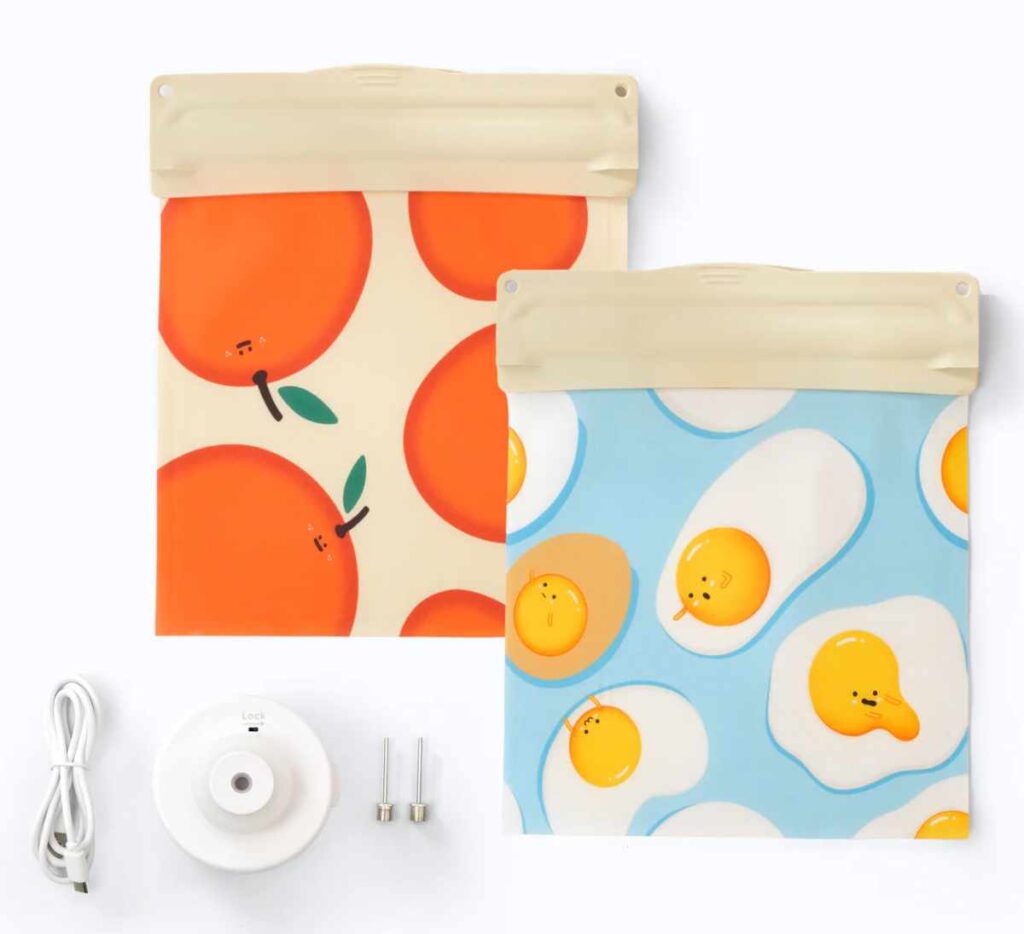
This is the image of the starter bundle from the Silivac website, with two bags, the vacuum machine, and two needles to insert into the bags.
PLEASE NOTE: I had never heard of Silivac until my son told me about them. He has no relationship at all with the company. I have received no money or any inducements to write this review. I bought the starter pack and an extra bag with my own money, receiving a 10% discount like anyone else could. I think the discount is still available.
I used the Silivac machine for the first time a week ago, making pork tenderloin steaks. You take a tenderloin and pound it to about an inch thick. Then, you cut the large, flattened tenderloin into two steaks. I put both into one bag and sealed it, which is just like sealing a Ziploc bag. I then removed the air with the Silivac vacuum device, and put the bag into the water. If you are interested, I used this recipe for the steaks. I subscribe to America’s Test Kitchen (ATK) and am not paid anything by the company.
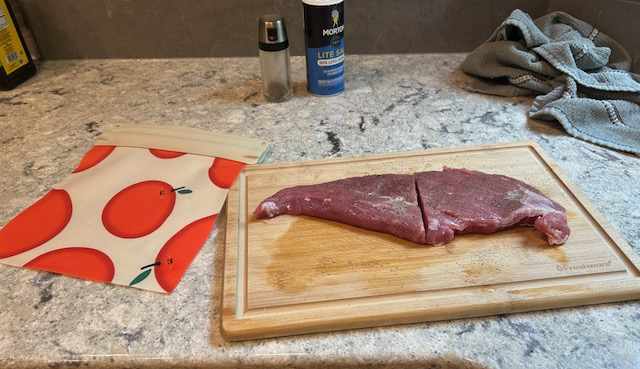
The photo below shows the bag on the left and the tenderloin steaks on the right. Please note that the salt is Morton’s Lite Salt, which has been shown to lower blood pressure. Also, because of possible cross-contamination, I put the dish towel in the washing machine.
The company is hoping to soon make larger bags, and I intend to buy one, but the steaks fit in one bag easily. The machine was simple to use, and I have a picture below.
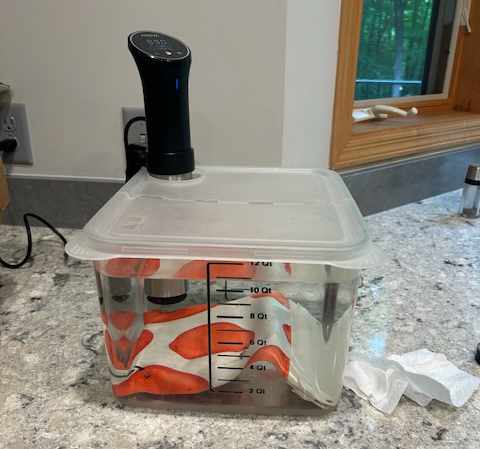
This is my set-up, with the sealed bag in the water. The machine is an Anova. The container is Everie, though you can use a deep pot. Later in the post, I will show you how the Silivac machine works.
Below is a photo of the pork after it finished cooking. As you will see from sous vide recipes online, to make it taste better and to make it look more appealing, you dry the surfaces of the pork and sear it on the stove, grill, or broiler.
ATK uses a freezer bag in their recipe. To do so, you use a water replacement technique that helps remove all the air from the bag as you put it in the water. Of course, I don’t like to do that because of the microplastics. The Silivac bags have two seals with an air compartment in between. It is simple to remove all the air. Much easier than the Ziploc technique. Silivac bags have two seals. You seal the outer one, attach a needle to the vacuum, and insert it in a hole on the side of the bag. Turn on the machine, and when the air is all gone, close the inner seal and remove the needle. The sous vide cooking is just how you would do it with a Ziploc bag or vacuum sealer with a plastic bag.
The following week, I made pork chops. They turned out perfectly. After cooking, I dried the chops and seared them in a cast-iron skillet on the stove. Read the recipe’s instructions to avoid overcooking the pork or setting off the smoke alarm.
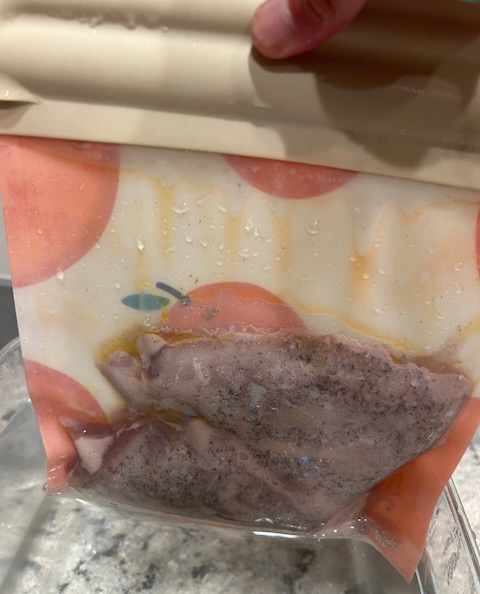
The next images show me adding a pork chop to the Silivac bag, attaching the device via a metal needle, and the pork chop inside the vacuum-sealed bag.
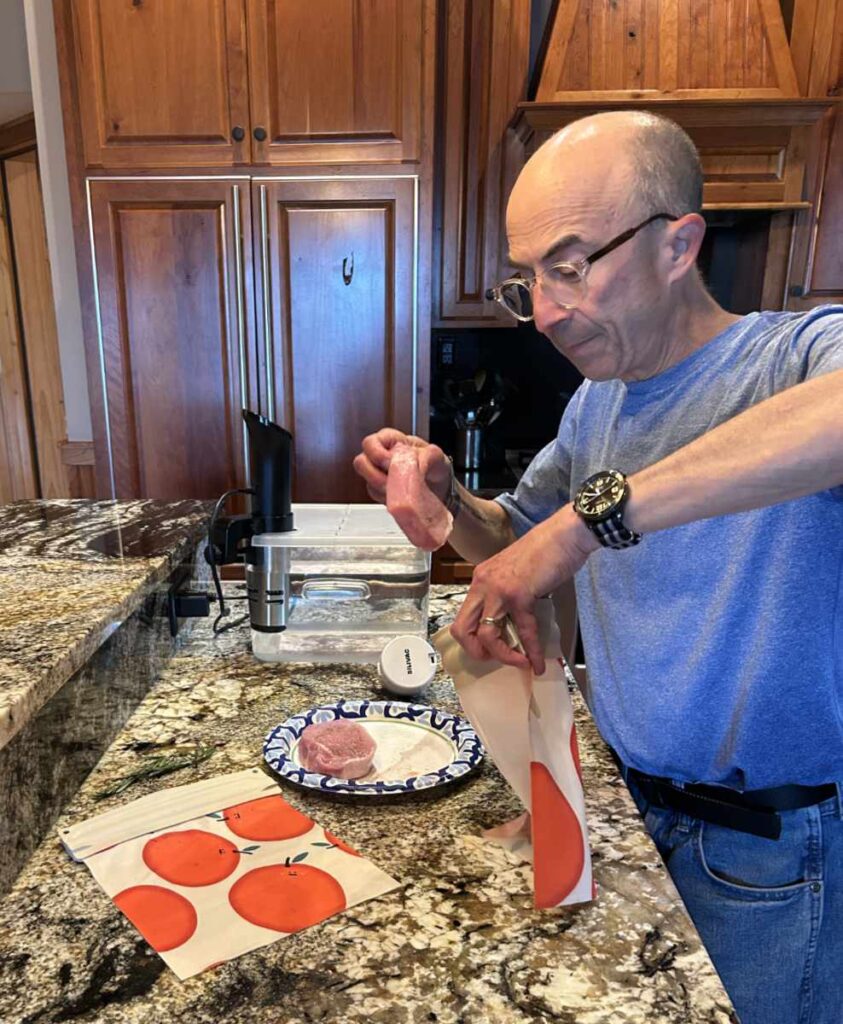
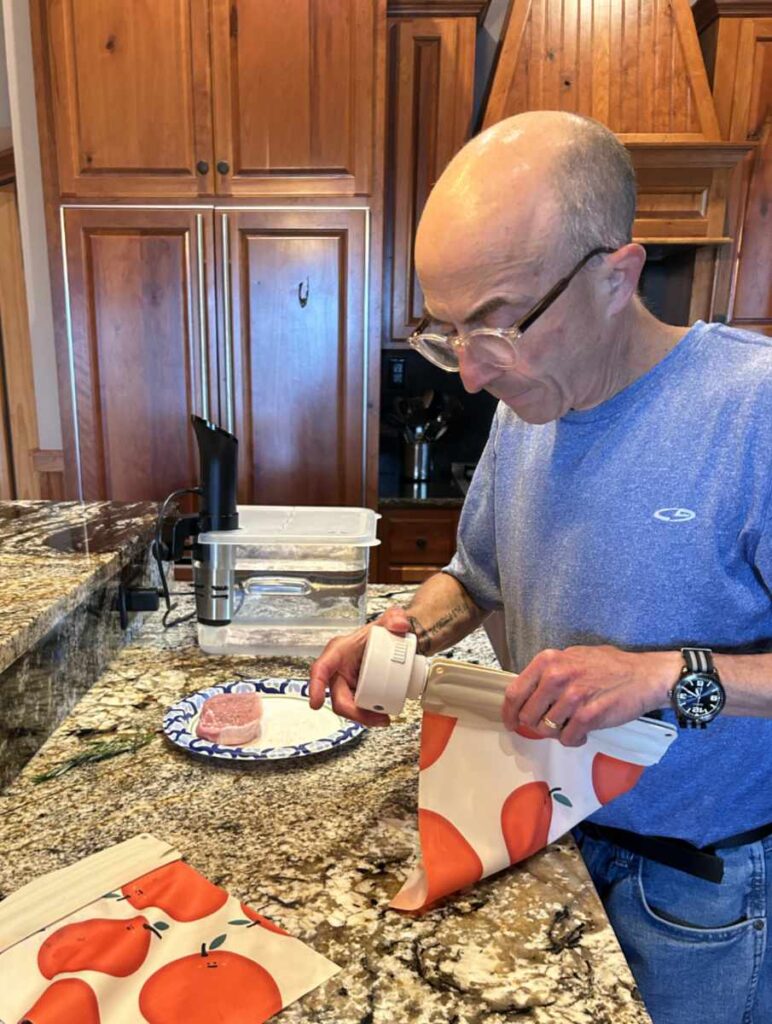
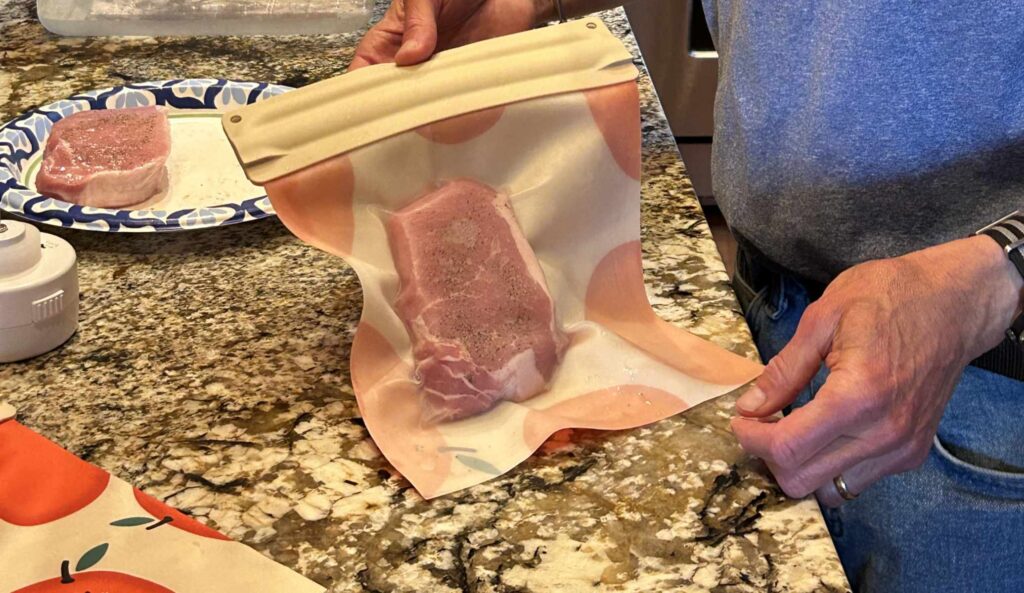
Recipes come with recommended times and temperatures. I cook pork chops for 90 minutes, starting when the water reaches and holds at the temperature I want. Just like cooking in an oven or on a grill, the length of time and temperature you cook at will affect how done the meat is, but it is difficult to overcook meat using sous vide. Below is a photo of the meat at the end of immersion cooking. testtttt
Conclusions
- Silivac bags shed no microplastics.
- I have no concerns regarding the safety of the system, provided you follow the recommendations of a reputable cooking recipe.
- The bags are made of high-grade silicone and should last a long time.
- The system is easy to use.
- The vacuum seal was equivalent to vacuum sealing with plastic and much simpler. It is a clear step up from Ziploc bags.
- The food came out as good as I have made with any method of sous vide. There were unexpected benefits. I messed up the sealing once and simply unsealed the bag and resealed it in a matter of seconds. If you mess up with a plastic vacuum seal, you generally have to throw away the bag. The Silivac system avoids a problem with plastic vacuum sealers. They seal the bag with heat, melting the plastic. That works poorly if there is liquid at the edges of the bag. Also, when you use a vacuum sealer with plastic, it uses a higher pressure and compresses the meat more. This can force contaminated liquid into parts of the machine that are difficult to clean, causing a risk of infection. Silivac bags can seal even if they are wet, and in the small chance liquid gets into the machine, it would be simple to clean. Finally, it is easy to unseal the bag when you are finished cooking.
I am very pleased with the Silivac system and intend to use it for all my sous Vide cooking.
Disclosure: Some of the links in this post are 'affiliate links.' This means if you click on the link and purchase the item, I will receive an affiliate commission.
Disclosure: Some of the links in this post are 'affiliate links.' This means if you click on the link and purchase the item, I will receive an affiliate commission.